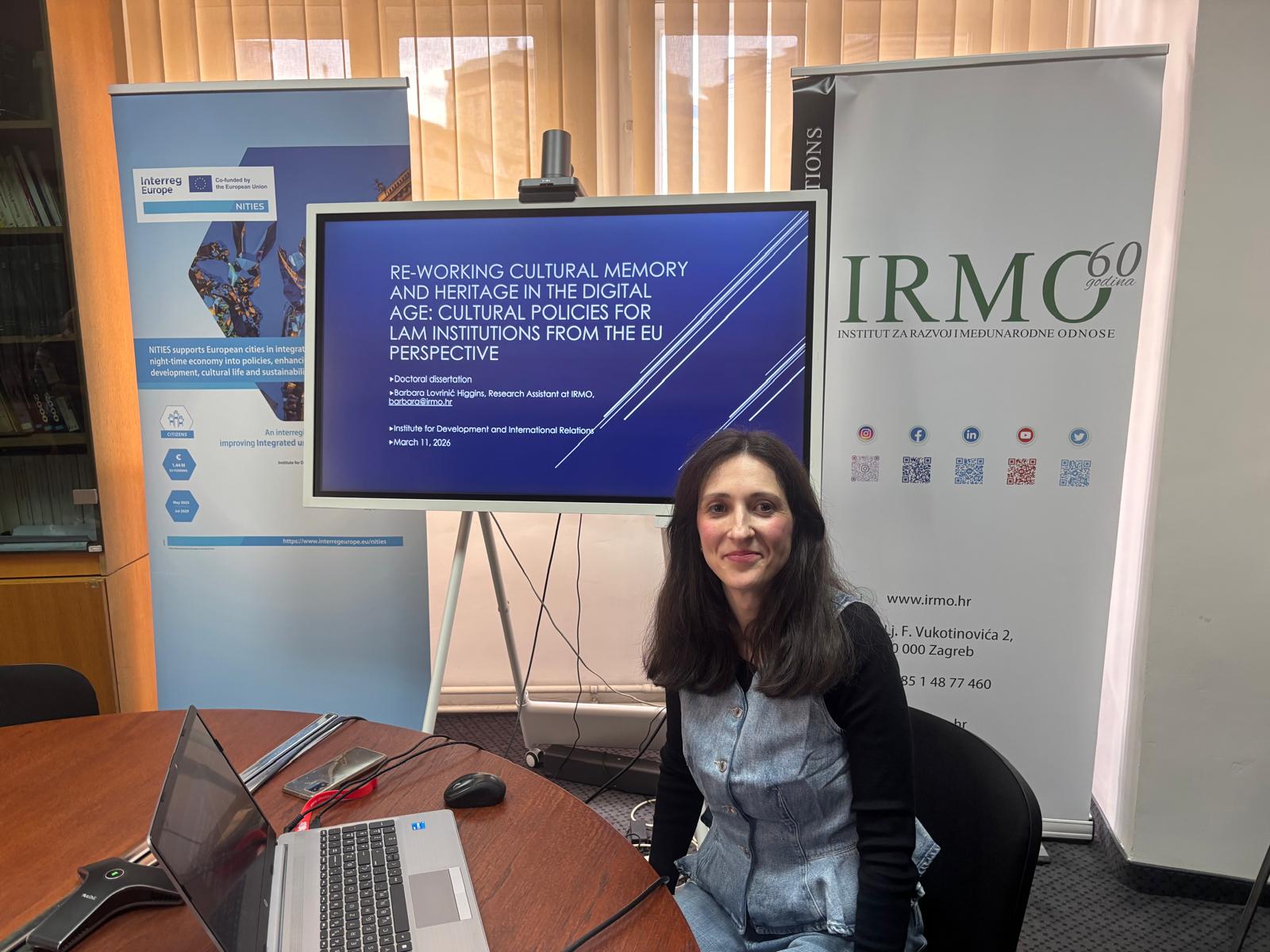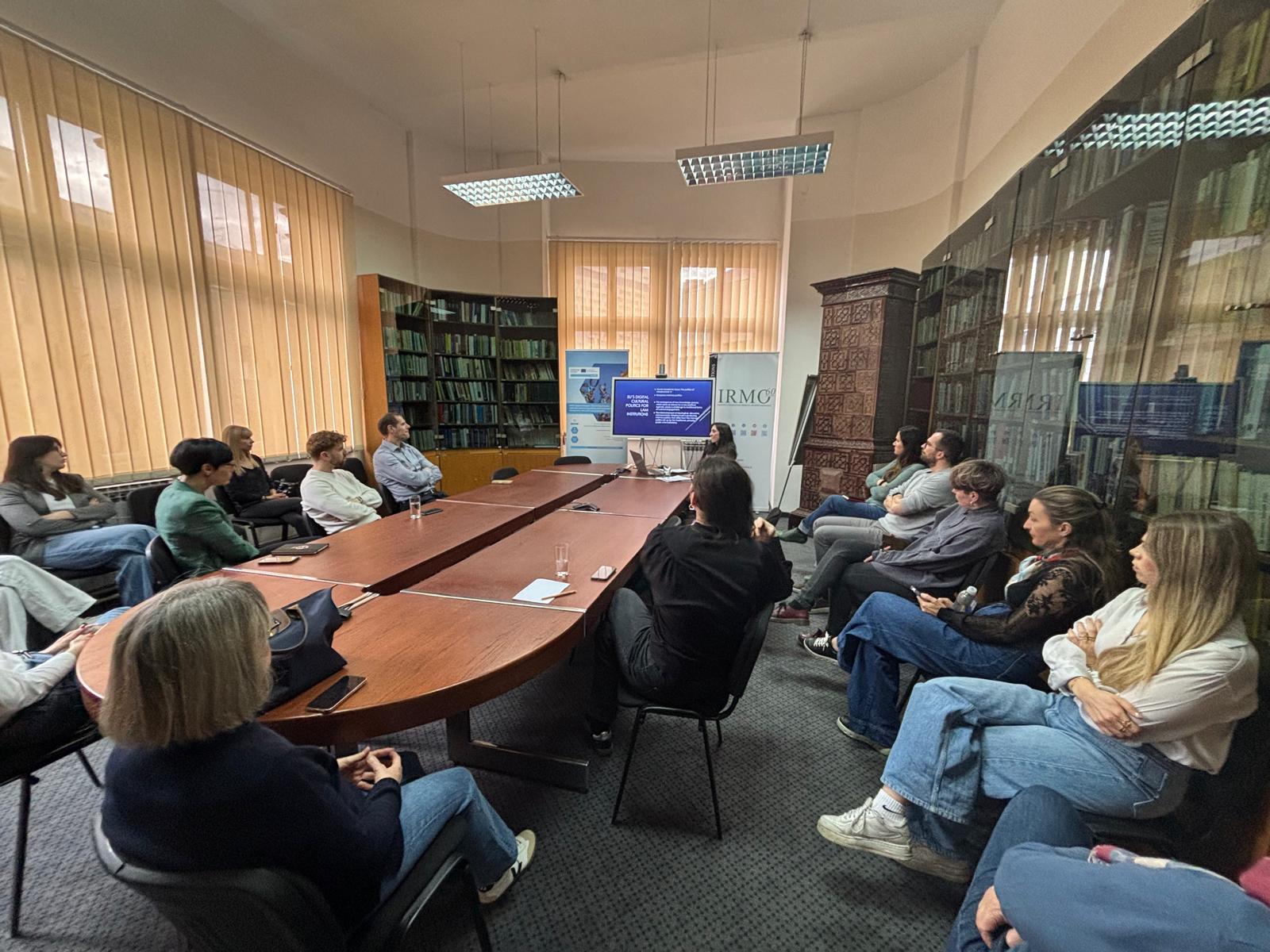
The library of the Institute for Development and International Relations (IRMO) recently hosted a presentation of the doctoral research results by CULTMED collaborator, Barbara Lovrinić Higgins, PhD, who recently defended her dissertation titled “Re-working Cultural Memory and Heritage in the Digital Age: Cultural Policies for LAM Institutions from the EU Perspective.” During the presentation, Dr. Lovrinić Higgins shared the key insights and conclusions of her research with the audience, while also reflecting on her experiences throughout the process of writing her doctoral thesis.
The Transformation of Heritage Institutions in the Digital Age
The dissertation addresses the profound transformation processes that cultural heritage institutions—namely libraries, archives, and museums (the so-called “LAM” institutions)—face in the digital age. These processes are redefining the role of these institutions in society, reshaping cultural memory, and generating new value through digital collections. Today, digitization and hyperconnectivity enable significantly broader audience engagement and the development of participatory practices where users themselves become co-creators of knowledge. However, these shifts simultaneously blur traditional boundaries between individual and collective memory, as well as physical and digital spaces.
The Impact of EU Policies and Practical Obstacles
Utilizing the theoretical frameworks of mediatization and media archaeology, the research investigates how digital technologies impact the cultural heritage sector and how the European Union’s regulatory framework (such as copyright laws and open data policies) shapes its use and reuse. The research findings, based on a qualitative methodology and interviews with sector experts, highlight a crucial paradox: despite digitization bringing greater visibility to cultural heritage, significant obstacles remain in practice, primarily due to complex legal frameworks. As a key conclusion and recommendation, the study emphasizes that ensuring long-term sustainability and innovation within the heritage sector requires adopting user-oriented digital strategies and actively fostering a culture of open access.