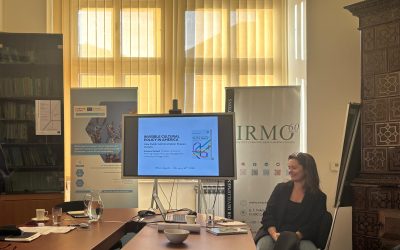
The Head of the Centre for the Sociology of Media and Digital Society (CEMEDIG), Dr. Paško Bilić, participated on 20 January 2026 in a round table of the Parliamentary Committee on Information, Informatization and Media, organised on the topic of the European Media Freedom Act (EMFA), which has been in force since 8 August 2025 in all Member States of the European Union. In the Republic of Croatia, a second reading is expected of the Draft Act on the implementation of the EMFA, that is, Regulation (EU) 2024/1083 establishing a common framework for media services in the internal market and amending Directive 2010/13. Participants in the round table included Dr. Iva Nenadić (European University Institute in Florence), Ms Tena Šimonović Einwalter (Ombudsperson), Ms Maja Sever (President of the Croatian Journalists’ Union), Ms Melisa Skender (representative of the Croatian Journalists’ Association), Ms Oriana Ivković Novokmet (Gong) and Mr Josip Popovac (President of the Council for Electronic Media).
First, the economic dimension. According to all relevant indicators, including the MPM results, the greatest risks to media freedom and pluralism in Croatia are found in the area of market pluralism. Put simply, regulation of the media market does not produce the expected effects in the public sphere. In economic terms, such a situation can be interpreted as market failure. This necessarily calls for well-designed and active public policies. Media and journalism cannot be treated merely as a creative industry dependent on project-based funding and unstable market revenues, but primarily as a public interest and a public good. At the same time, empirical data clearly show that large online platforms predominantly control the digital advertising market, with direct and harmful consequences for the economic sustainability of professional media. In such an environment, the race for advertising revenue often takes place at the expense of quality, fact-checking, and professional journalistic standards. The current draft law on the implementation of the EMFA should be expanded to include clearer regulation of the dominant position of platforms in the media market and, in particular, to further elaborate the media pluralism test as a tool in assessing media ownership concentration that also takes into account elements of editorial independence.
Second, the political dimension. Structural economic problems cannot be addressed without strong, independent regulatory bodies and media outlets that are not primarily dependent on market mechanisms. Of particular importance is the existence of a public media service that enjoys both de facto and de iure a privileged social position, enabling it to represent the interests of the public independently of commercial and political pressures. Within the existing institutional framework, key regulatory and governing bodies—both in the case of the Agency for Electronic Media and within the public service broadcaster HRT—are to a large extent shaped through political appointment processes. In the preparation of the law on the implementation of the EMFA, discussion of possible alternative models for selecting these bodies was absent. The prevailing view within a large part of the professional community is that the existing models do not ensure a sufficient level of independence and that it is necessary to involve professional associations, civil society, and the academic community more strongly.
Third, the socio-organisational dimension. Economic and political factors have very concrete consequences for the internal organisational culture of media organisations and their resilience to external pressures. It is precisely here that perhaps the most significant potential of the European Media Freedom Act lies: strengthening genuine editorial independence. In the Republic of Croatia, this area of regulation is extremely weak and largely declarative. Existing mechanisms, such as the so-called Media Statutes, are insufficient and rarely applied in practice. The system of self-regulation is fragmented, and various studies show that journalists identify advertisers as one of the main sources of external pressure, report commercial and political interventions in editorial decisions, and note that investigative journalists—especially at the local level—are exposed to campaigns of harassment and intimidation. These problems should not be viewed as isolated incidents, but as outcomes of structural economic and political relations. For this very reason, they should form an integral part of the so-called media pluralism test, particularly in procedures for assessing ownership concentration.